Planning time
half a day
Was 2+ weeks
20x faster
How one seller rebuilt a 16-marketplace Prime Day restock plan in half a day after their supply-chain manager quit.
2 weeks free · no credit card
As featured in


Before and after
The operating delta leads the story: planning got cheaper, faster, and broad enough to cover every marketplace in one pass.
Planning time
half a day
Was 2+ weeks
20x faster
Monthly planning stack
$147
Was $3,000
~$1.5K saved
Market coverage
16 at once
Was market by market
one pass
Forecast window
137 days
Was manual guess
Prime Day ready
Source math
Claude Code $100 + PROPAMP AI $47 = $147/mo, replacing a $3,000/mo supply-chain-manager workflow.
The task
The supply-chain manager quit weeks before Prime Day, leaving a 16-marketplace restock plan that used to take two weeks.
Owner gap
Supply-chain manager quit weeks before Prime Day
Scope
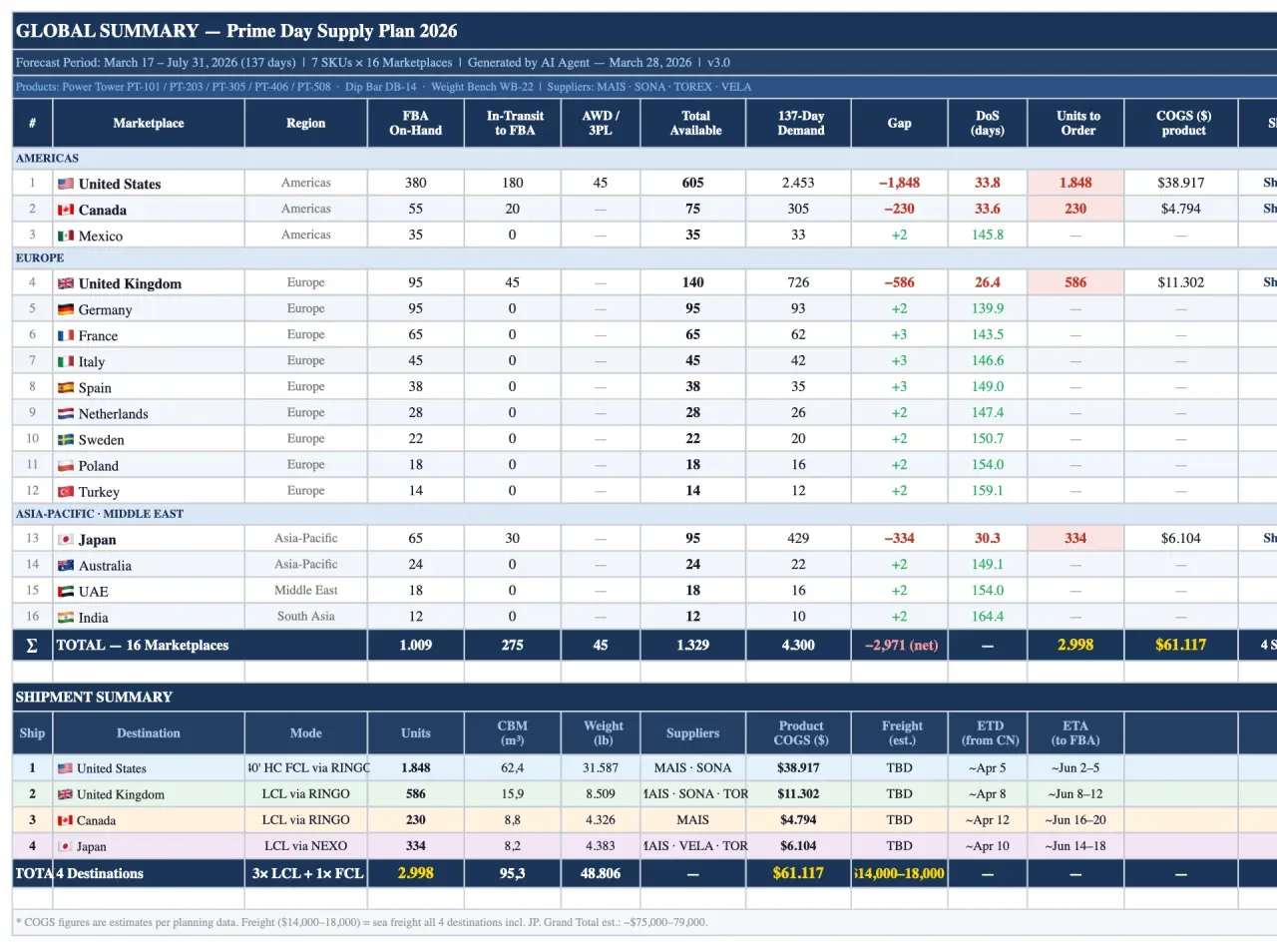
16 marketplaces, 2,000 boxes, 4 shipments
Deliverable
Master Excel plan plus customs-ready documents
Half a day. One AI agent.
Why it used to take two weeks
Manual planning meant reconciling velocity, lead time, customs, and shipment splits by hand across 16 markets. One velocity baseline error used to cost days.
Spreadsheet path
Marketplace velocity
Lead times
Customs docs
Shipment splits
Agent path
5 min
The agent caught and fixed the US velocity baseline error instead of letting it contaminate the plan.
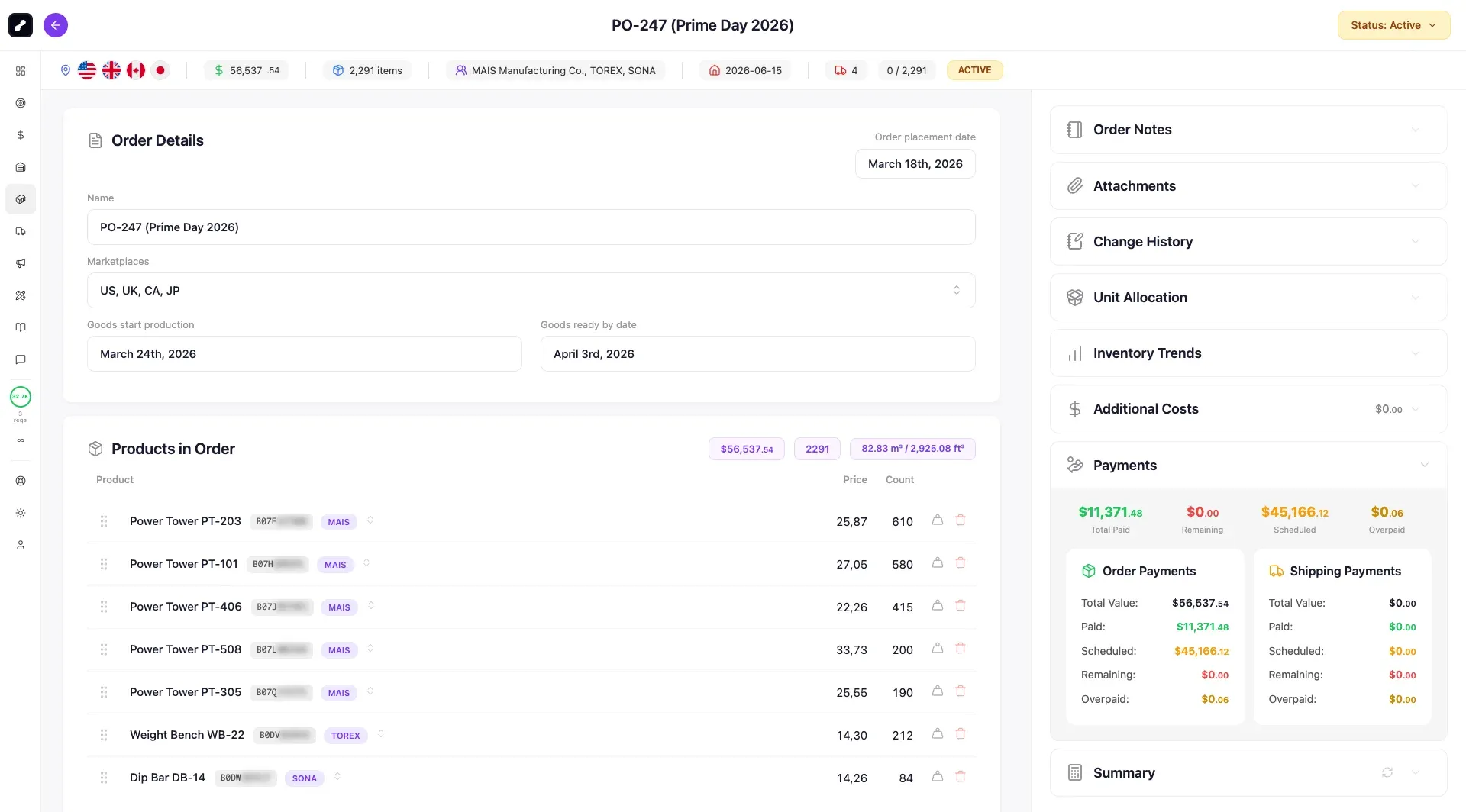
How it actually works
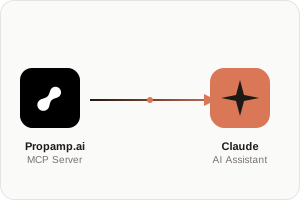
The workflow follows the source case study: MCP data pull, per-market velocity, forecast, shipment sizing, workbook, and customs-ready docs.
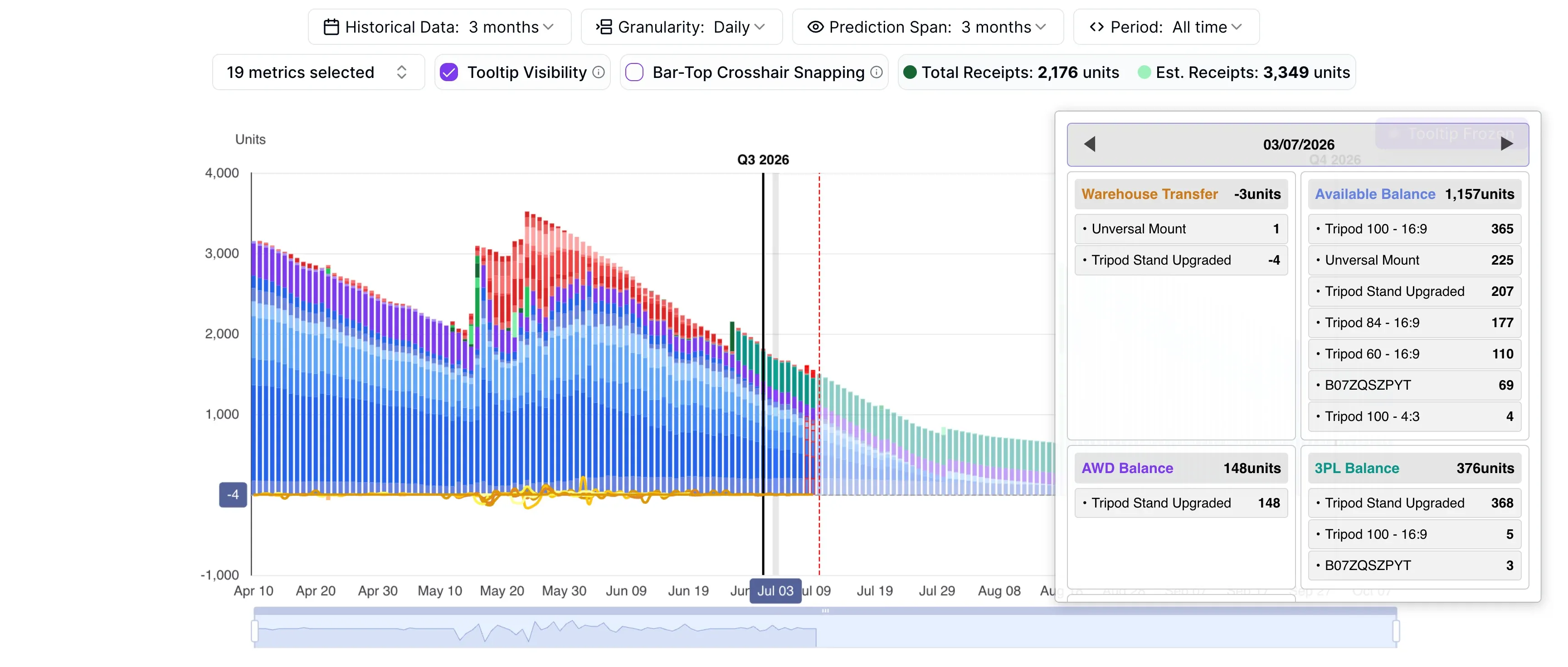
Seller Central and logistics data came through the MCP server instead of another spreadsheet export.
Seller Central + logistics
The agent fixed the US-velocity baseline problem instead of applying one blended average everywhere.
baseline fixed in 5 min
The plan ran a 137-day forecast so Prime Day demand, lead time, and coverage were visible together.
137-day forecast
The 2,000-box order was split into four shipments with marketplace-level restock logic.
2,000 boxes · 4 shipments
The output was a master Excel deliverable the operator could inspect, edit, and hand off.
master Excel
Customs-ready documents came back with the shipment plan instead of becoming a second manual project.
$200/doc work avoided
The math
The source narrative compares the old supply-chain manager workflow against Claude Code plus PROPAMP AI. PROPAMP plan pricing stays separate from this case-study math.
Supply-chain manager
old workflow
$3,000/mo
Claude Code
new agent stack
$100/mo
PROPAMP AI
new agent stack
$47/mo
Net roughly $1,500/mo saved
The bigger shift was speed: the seller could test the agent workflow for roughly $150 instead of rehiring the whole manual process.
Seller tips
The strongest advice from the source case study is practical: brief clearly, separate market velocity, and keep the data connected.
Treat it like a brilliant new hire on day one.
Treat the agent like a brilliant team member on day one: give context, constraints, and what good output looks like.
The winning input was a clear operator brief, not a prompt-engineering ritual.
A blended baseline can hide the market that runs out first. Compute each marketplace separately.
The agent gets useful when Seller Central, shipment, and logistics records are clean enough to reason over.
First-hand

7 figure Amazon seller
$3,000/mo → $147/mo · 20x faster
“When our supply-chain manager left weeks before Prime Day, we rebuilt the full 16-marketplace restock plan with Propamp and an AI agent in half a day — and the monthly planning stack dropped from $3,000 to $147.”
Your move
Connect your account, point an agent at the data, and test whether your next restock plan can move this fast.